

How to choose the power of acoustics for the area of the hall: golden rules of calculation
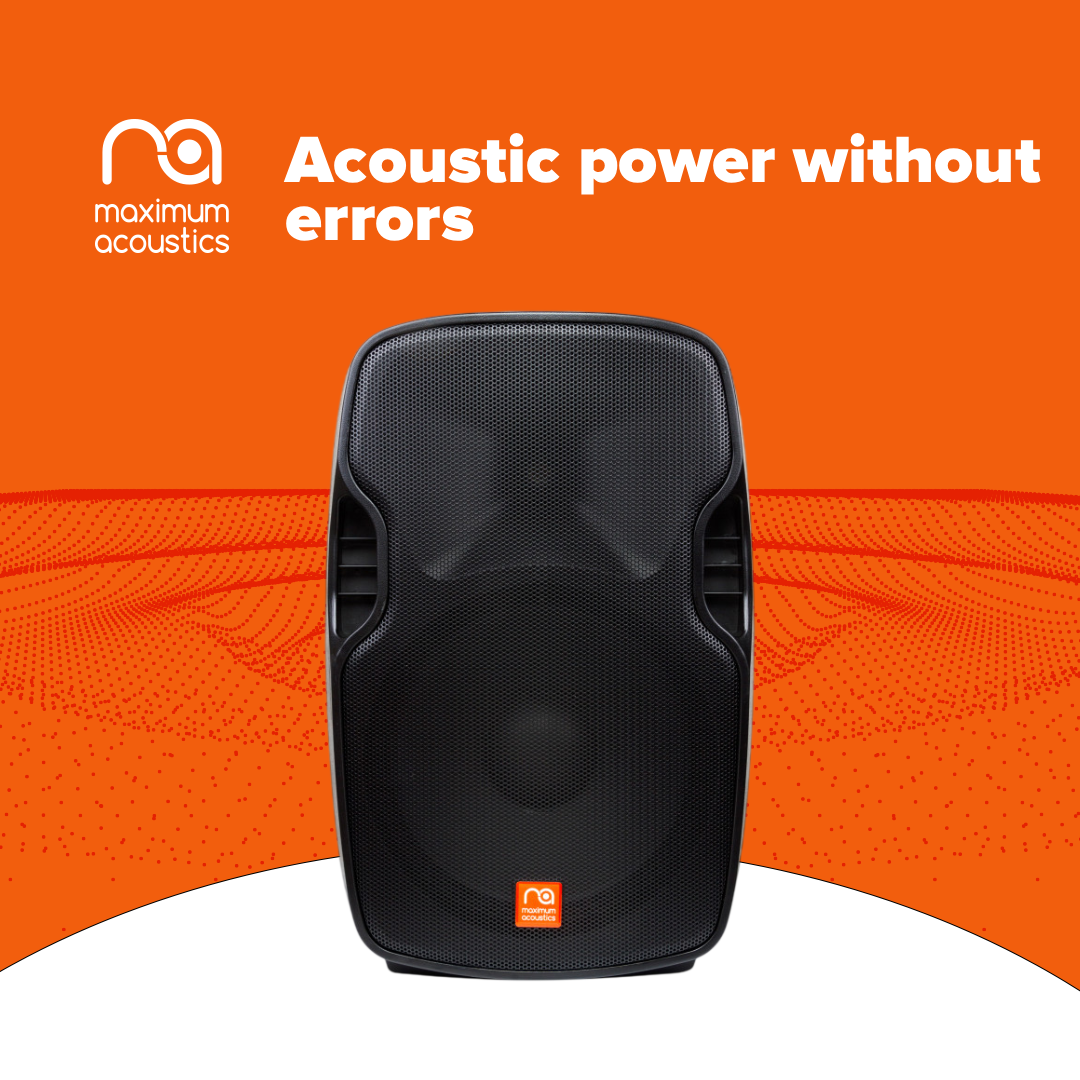
When choosing a sound system, many people focus solely on the number of Watts, believing that the bigger the number on the box, the better the performance. In reality, things are much more complicated. A system with insufficient power forces the equipment to operate at its limits, resulting in distortion, overload, and unpleasant clipping. On the other hand, an excessively powerful sound system often means unnecessary expenses that do not improve the sound quality for a particular venue.
That is why professional loudspeaker selection begins not with the brand or speaker size, but with the correct calculation of the required power. The good news is that you do not have to be a sound engineer to make the right choice. There are simple, practical guidelines that are widely used by AV installers, event hosts, mobile DJs, and rental companies. Let's take a closer look at them.
What Does a Watt Really Mean? Debunking the Biggest Myth
The first thing you should pay attention to is the type of power rating. Product specifications often include values such as Peak, PMPO, or Max Power. These figures are commonly highlighted in marketing materials because they look impressive. However, they only represent the maximum short-term power that a speaker can withstand for a very brief period.
For real-world applications, you should always focus on the RMS (Root Mean Square) rating, also known as continuous power. This value indicates how much power a speaker system can reproduce consistently without overheating or introducing distortion.
It is also important to remember that equal power ratings do not always mean equal loudness. The final sound level is also influenced by speaker sensitivity, measured in decibels (dB). However, for quick and practical calculations, using the RMS rating as your primary reference is more than sufficient.
Golden Rules for Power Calculation: Two Proven Methods
Method 1. Calculate According to Room Size
This approach is widely used when designing audio systems for cafés, restaurants, educational facilities, and small performance venues.
- Background Music
If the primary goal is to create a pleasant atmosphere, approximately 1-2 Watts RMS per square meter is generally sufficient.
For example, a coffee shop or small bar with an area of up to 50 m² and a ceiling height of around three meters will typically require a sound system with a total output of 100-150 Watts RMS. This is usually enough to provide high-quality background music without excessive volume. Compact wall-mounted or suspended speaker systems are an excellent choice for this type of installation.
- Presentations, Lectures, and Conferences
For clear and intelligible speech reproduction, professionals recommend approximately 2-4 Watts RMS per square meter.
A conference room or classroom with an area of up to 80 m² and a standard three-meter ceiling height should generally be equipped with 200-300 Watts RMS of total system power. Active speaker systems with 8-inch or 10-inch drivers are commonly used for these applications because they deliver excellent speech clarity.
- Banquets, Parties, and Dance Events
When music becomes the main focus of an event, the calculation increases to 5-10 Watts RMS per square meter, and sometimes even more.
A banquet hall or restaurant with an area of 100-150 m² and a ceiling height of 3-4 meters usually requires 800-1200 Watts RMS. The most effective solution is a system consisting of two top speakers and one or two subwoofers, capable of delivering both clear vocals and powerful dance music.
For auditoriums, clubs, and larger venues exceeding 200 m² with high ceilings, systems rated at 2,000 Watts RMS or more should be considered. These installations typically include powerful active or passive 15-inch top speakers combined with multiple subwoofers.
Method 2. Calculate According to Audience Size
Another simple rule has been used in the event industry for many years.
For banquets, corporate events, weddings, and dance parties, it is recommended to allocate at least 10 Watts RMS per person.
For example, if approximately 100 guests are expected, the total system output should be around 1,000 Watts RMS. This provides enough headroom to achieve comfortable volume levels without overloading the equipment.
Important Factors That Are Often Overlooked
- Ceiling Height and Interior Materials
Even a correctly calculated system may prove insufficient if the venue has high ceilings or a large number of hard reflective surfaces. Glass, concrete, tile, and metal all reflect sound significantly, reducing speech intelligibility. If the ceiling height exceeds four meters, it is advisable to increase the calculated power by approximately 20-30%.
- Outdoor Events Require a Different Approach
Outdoor environments lack walls that help contain sound. A considerable amount of acoustic energy simply disperses into open space, which is why the recommended power for outdoor events should generally be doubled or even tripled compared to an equivalent indoor venue.
- A Subwoofer Is Not a Luxury - It Is a Necessity
Low frequencies require the greatest amount of amplifier power. If you are planning dance events, live performances, or modern music playback, relying solely on two full-range speakers is unlikely to produce satisfying results. A subwoofer handles the low-frequency range, reduces the workload on the main speakers, and delivers fuller, richer, and more comfortable sound even at higher volume levels.
Correctly calculating the power requirements of a sound system makes equipment selection much easier and helps avoid two of the most common mistakes: insufficient volume or overspending on unnecessary power. For most practical applications, it is enough to use simple calculations based on room size or audience capacity while also considering ceiling height, room acoustics, and the format of the event.
Audio professionals recommend choosing a sound system with approximately 20% more power than the calculated requirement. This allows the system to operate at around 70% of its maximum capacity, producing cleaner sound, generating less heat, and ensuring a longer service life without the risk of overload.
If you are selecting an audio system for a café, restaurant, school, conference room, sports facility, or professional live event, explore the Maximum Acoustics product catalog to discover a wide range of loudspeakers, subwoofers, and complete sound system solutions for virtually any application. Properly selected equipment will become the foundation of outstanding sound quality at every event.
Leave your comment