

Straight stand or “crane”: choosing a microphone base for the task
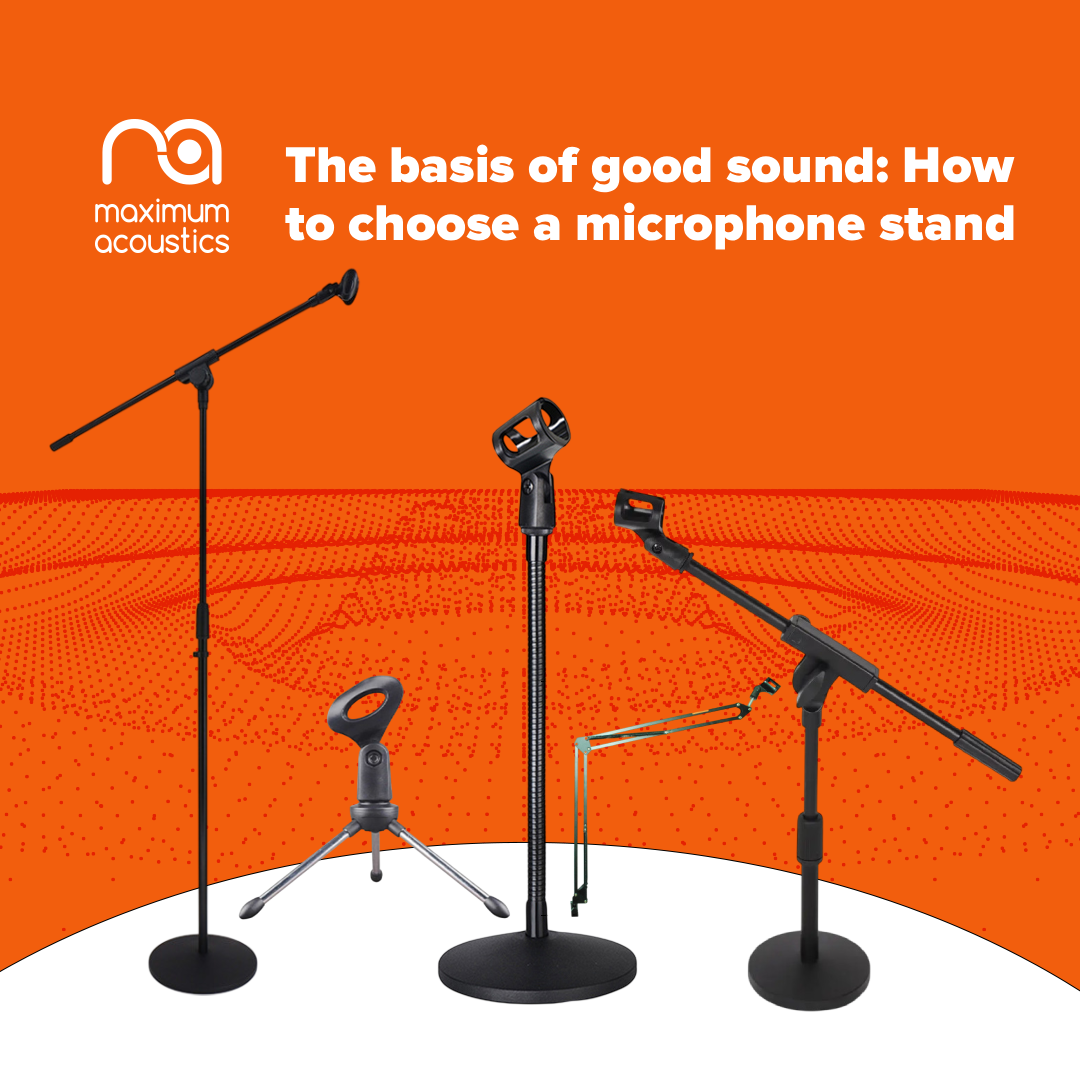
A microphone stand may seem like such a simple accessory that it is often chosen as an afterthought. As a result, you may end up with a stand that takes up too much space on stage, gets in the way of an instrument, or gradually lets the microphone droop under its own weight. These shortcomings become especially noticeable during performances, recording sessions, or long rehearsals.
In fact, the choice between a straight stand and a boom stand should not be based on budget alone. The performer’s freedom of movement, the position of the sound source, and the physics of the load placed on the stand are far more important.
Straight Stand: Fewer Parts, Maximum Compactness
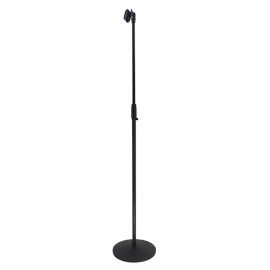
A classic straight microphone stand features a vertical, usually telescopic shaft without an extension arm. The microphone is positioned directly above the base, so the center of gravity remains almost perfectly aligned with the vertical axis. This makes the stand stable and predictable, even when the microphone is frequently placed in and removed from its holder.

Another advantage of this design is its space efficiency. A straight stand looks clean on stage and does not create unnecessary visual clutter in front of the performer. This is why it is often used by solo vocalists, stand-up comedians, and public speakers. It is also convenient for press conferences, lectures, and performances at a podium.
However, compactness comes with certain limitations. The vertical shaft is positioned directly in front of the performer, so a guitar or bass may bump into it, while keyboard players may have to find a compromise in positioning. A straight stand is also not the best option for miking guitar amplifiers, drums, or other sound sources where the microphone needs to approach from the side or above.
Boom Stand: When the Microphone Needs to Reach the Performer
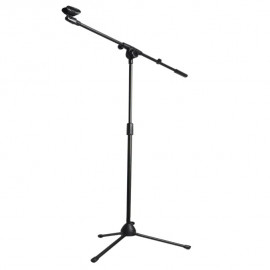
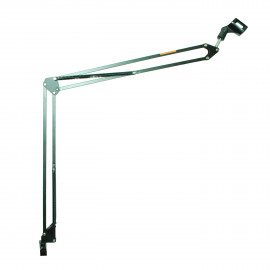
A boom microphone stand adds an adjustable angled arm to the vertical shaft. A pivoting clutch allows you to change both the angle and reach of the boom, making it possible to position the microphone above an instrument, in front of a musician, or beside a sound source without moving the base itself.

For a singing guitarist, this means keeping the area in front of the instrument clear. For a keyboard player, it allows the microphone to extend over the keyboard, while a drummer can position it above the kit or next to an individual drum. This format is also convenient for backing vocals, recording acoustic instruments, miking guitar amplifiers, and setting up podcasts at a table.
However, a boom stand has one important consideration: the extended arm acts as a lever. The farther the boom is extended and the heavier the microphone, the farther the center of gravity shifts away from the vertical axis. For better stability, one leg of the tripod should therefore be positioned directly beneath the extended boom arm. This is especially important when using heavy studio microphones with shock mounts.
Round Base or Tripod: The Foundation Matters
The design of the base is just as important as the type of stand itself. One classic option is a round cast base, often referred to as a weighted or disc base. Thanks to its relatively small diameter, it takes up minimal space and has no widely protruding legs that performers might trip over. The additional weight of the base helps keep the vertical shaft stable, making this solution particularly suitable for straight vocal stands.
The downside of a heavy base is its weight. If equipment is regularly transported between concerts or events, several such stands can quickly add significant weight to the overall setup. On uneven surfaces, a round base may also be less stable than a properly positioned tripod.
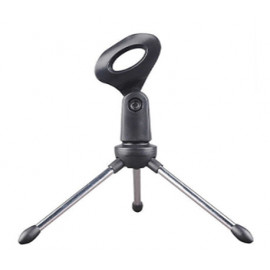
A folding tripod requires more floor space, but its widely spread legs create a larger support area and provide excellent resistance to swaying. After use, the legs fold alongside the shaft, making the stand easier to transport. This is why a wide tripod is generally the most practical solution for a boom stand: it compensates more effectively for the shifted center of gravity when the boom arm is extended.
The general rule is simple: a straight stand pairs perfectly with a heavy round base, while a full-size boom stand is usually better suited to a wide tripod base.
What Else Should You Look For?
One of the most important components of a boom stand is the boom adjustment clutch. A high-quality metal or reinforced plastic mechanism should securely hold the selected angle without requiring excessive tightening. If the joint gradually slips, the microphone begins to droop, forcing you to readjust its position repeatedly during a performance.
The thickness and rigidity of the tubing are also important. Tubes that are too thin may flex under load, while loose telescopic connections can produce unwanted vibrations and rattling noises.
Before choosing a stand, it is also worth checking the threaded mounting system. The 3/8" and 5/8" standards are widely used in microphone equipment, so having the appropriate adapter makes it much easier to install different microphone holders, clips, and shock mounts.
Cable clips are another small but useful feature. They allow the XLR cable to be secured along the stand, preventing it from hanging in front of the performer, swinging freely, or transmitting unwanted mechanical noise.
Which Stand Should You Choose?
There is no single microphone stand that is perfect for every situation. For solo vocals, stand-up performances, presentations, and stages where keeping equipment in front of the performer to a minimum is important, a straight stand with a heavy round base remains a practical standard.
If greater positioning flexibility is required, a tripod boom stand covers most common needs for musicians, from vocals with guitar or keyboards to miking drums, guitar amplifiers, and acoustic instruments. The key is to choose the appropriate boom reach, consider the weight of the equipment, and position the base correctly.
You can find a suitable solution for the stage, studio, rehearsal room, podcast setup, or event venue in the Maximum Acoustics stand catalog, choosing a model that matches your specific application.
Leave your comment