

Sound in the Cold: What Happens to Speakers, Batteries, and Mixers During Winter Operation
A winter fair, an outdoor sporting event, or an off-site performance after several hours in an unheated van creates demanding conditions for audio equipment. Speakers may sound different, batteries may drain faster, and mixer controls may become stiffer. The most dangerous consequences sometimes appear after the event, when cold equipment is brought into a warm room.
A common mistake during winter setup is to connect the system immediately after unloading, boost the bass, and push the signal level “into the red.” Cold simultaneously affects the mechanics of speaker drivers, battery electrochemistry, and the conditions that cause condensation. Reliable operation therefore begins with checking permitted temperatures, transporting equipment correctly, and allowing enough time for acclimatization.
Speaker drivers: why bass changes and overload becomes more dangerous
The moving assembly of a low-frequency driver is supported by the outer surround and the spider. Their compliance depends on the material, treatment, temperature, and humidity. In cold conditions, some rubber and fabric components become stiffer. If suspension stiffness increases, the driver’s resonant frequency rises, changing its low-frequency behavior. Klippel research confirms that suspension properties depend on environmental conditions, but there is no universal “stiffening” threshold for all drivers.
Temperatures below +5 °C should be treated as a reason to check the operating requirements of a particular system more carefully. They do not mean that every suspension has already stopped functioning properly. High-frequency driver diaphragms also respond differently: polymer, fabric, and titanium designs have different properties, while adhesive joints and the driver’s construction also affect the outcome.
If the bass seems weaker, sharply boosting low frequencies with an equalizer increases the load on both the driver and the amplifier. Under unfavorable conditions, this can damage the surround, cone, or voice coil assembly. Bass also often sounds less full outdoors because the familiar reinforcement from walls is absent. Compensating for this difference by increasing the level without restraint is dangerous.
After the equipment has acclimatized and you have checked that it is dry, start with quiet background music and gradually increase the level. The first 15–20 minutes can be used for a listening check without peak loads. However, setting a control to 10–15% does not mean the system is delivering the same percentage of its power, and quiet playback in freezing conditions does not guarantee that the suspensions will warm up. If the temperature is outside the manufacturer’s permitted range, the equipment needs different placement conditions.
Batteries: where the runtime goes
Cold slows electrochemical processes, increases a battery’s internal resistance, and causes a greater voltage drop under load. As a result, the system may shut down earlier even though the battery still contains some energy. Lead-acid batteries also lose usable capacity at low temperatures, especially at high discharge currents.
A speaker that ran for six hours in summer may shut down after just one and a half to two hours in winter if freezing temperatures, high volume, and an aging battery combine unfavorably. However, this is a possible scenario rather than a universal formula. The reduction in runtime depends on battery chemistry, condition, temperature inside the enclosure, and actual power consumption. An important event requires a power reserve tested under conditions close to those expected during use.
Charging lithium batteries requires particular attention. In a cold cell, lithium can deposit on the anode as metal instead of being properly incorporated into its structure. This phenomenon is called lithium plating. It reduces usable capacity and, under certain conditions, may be accompanied by dendrite growth and a risk of an internal short circuit. The risk depends on both temperature and charging current.
For ordinary portable equipment, the practical rule is simple: after exposure to freezing temperatures, first allow the battery to warm naturally to a room temperature of +15…+20 °C, check that there is no condensation, and only then connect it for charging. What matters is the temperature of the cells inside the enclosure. The manual defines the exact limits: for example, some LiFePO₄ batteries permit charging only at temperatures of +5 °C or above.
Lead-acid batteries have different charging requirements, including temperature compensation of the charging voltage. If the electrolyte is frozen or the casing is damaged, the battery must be inspected before a charger is connected in the usual way.
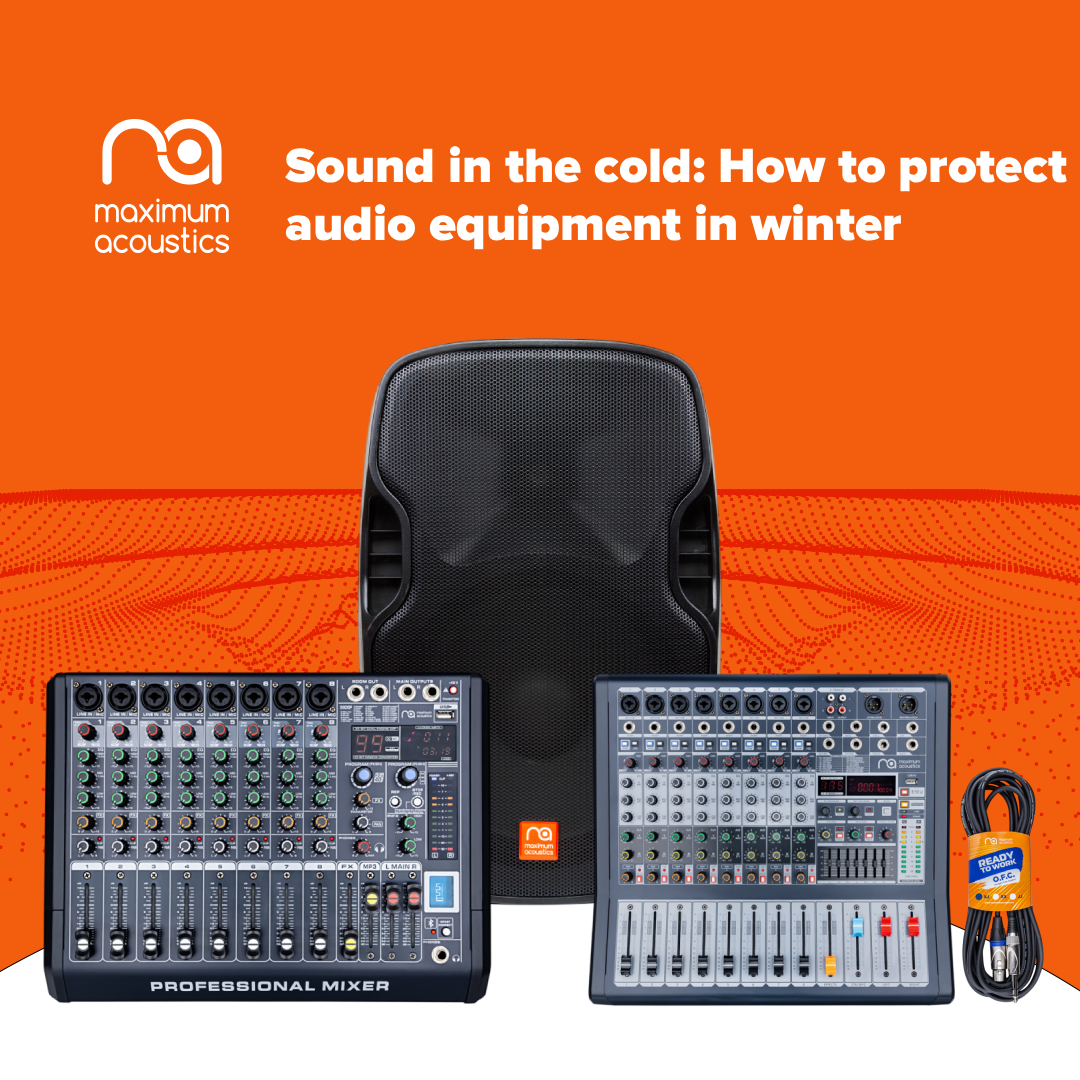
Maximum Acoustics Mobi and MusicBAND battery-powered systems are convenient for mobile performances thanks to their independent power supply and integrated playback features. For example, MusicBAND.100 has a built-in battery, Bluetooth, microphone and instrument inputs, wheels, and a telescopic handle. For winter outings, these capabilities should be supplemented by charging in advance in a warm room and preparing a backup power plan. Battery chemistry and temperature restrictions must be checked for the specific model.
Mixers and amplifiers: the main risk arises when returning to warmth
When a cold device enters a warm, humid venue, its temperature may be below the dew point. Water vapor then condenses on the enclosure, contacts, and internal components. The mixer may already look dry on the outside while moisture remains inside. Applying power at this point creates a risk of leakage currents, short circuits, and subsequent corrosion. Professional electronics manufacturers explicitly recommend waiting until condensation has completely dried before switching equipment on.
Cold also affects controls. In mechanisms that use lubricant, its viscosity may increase, making knobs and faders harder to move. Do not force them against this resistance. At low temperatures, liquid crystal displays may refresh more slowly, show noticeable trails, or change contrast. This does not always indicate a fault, but it requires checking after acclimatization.
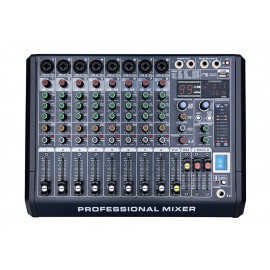
In a mobile setup, Maximum Acoustics CONCERTMIX provides control over signal sources, while POWERMIX combines a mixer with an amplifier for passive speakers. In particular, CONCERTMIX.8 has microphone preamps with phantom power, while POWERMIX.7008 includes a built-in amplifier and DSP processing. These functions help organize the audio signal chain, but do not in themselves confirm protection against condensation or operation at subzero temperatures. In winter, such units require a dry location, adequate ventilation, and compliance with the manual.
Cables and stands: freezing weather tests the entire setup
An inexpensive PVC jacket may lose flexibility in freezing conditions and crack when bent sharply. Areas near connectors are particularly vulnerable because stress is transferred to the conductors, solder joints, and cable strain relief. A cold cable should not be unwound with sudden pulls or coiled tightly.
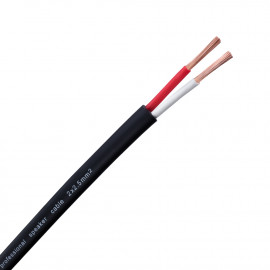
For winter setup, the verified temperature range of the specific cable jacket is important. Cold-resistant rubber compounds may retain flexibility better than ordinary PVC, but a professional cable does not necessarily need a rubber jacket. For example, Maximum Acoustics SPC.225 uses flexible PVC, has two conductors with a cross-sectional area of 2.5 mm² each, and has a manufacturer-specified operating range of −20 to +70 °C. This is a specific characteristic that can guide cable selection.
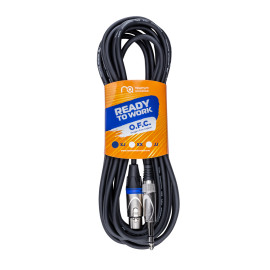
The documentation for Maximum Acoustics MIC cables, including MIC.XJ, also specifies a range of −20 to +70 °C. Ready-made MIC.XJ5 cables are fitted with XLR-female and 6.3 mm stereo jack connectors, while color coding helps distinguish connections quickly during setup. Even within the permitted temperature range, cables should be routed without tension, and connectors should be protected from snow and water.
Plastic clamps and locking knobs can become weak points in stands because the impact strength of some plastics decreases in cold conditions. Overtightening increases the risk of cracking. Place supports on a stable surface, use the safety pins provided by the design, and account for wind. Ice beneath the feet and a heavy speaker mounted high above the ground require particularly careful attention.
An engineer’s checklist: winter operating procedures
Before departure, check the permitted temperatures of every component, charge batteries in a warm environment, and prepare backup power. Transport equipment in dry covers or cases. They slow heat transfer and soften sudden temperature changes, although equipment will still cool down during prolonged exposure to freezing conditions.
During setup, protect the system from precipitation, wet snow, and contact with cold, damp surfaces. Provide dry shelter for the mixer and amplifiers while keeping ventilation openings unobstructed. A gradual startup is permitted only within the equipment’s operating temperature range.
During the soundcheck, begin at a low level without sharply boosting the bass. Check the channels gradually and listen for rubbing, crackling, or unusual distortion. Persistent overload, repeated shutdowns, and abnormal mechanical sounds require stopping and identifying the cause.
After returning to a warm environment, leave dry equipment in closed covers or flight cases, disconnected from mains power, for at least 2–3 hours. This is an initial guideline: large enclosures and batteries may need more time after severe cold. After acclimatization, inspect the equipment and allow any moisture to dry completely. If the equipment became wet from precipitation, simply waiting with it inside a closed case is insufficient: inspection and proper drying are required.
Before switching the equipment on or charging it again, make sure it has warmed up and dried out. Do not speed up the process with a hair dryer, heat gun, or direct contact with a radiator: localized overheating can damage plastic, adhesive joints, and the battery.
How to prepare a setup for the winter season
The reliability of a winter sound setup depends on the speakers, cabling, power supply, and working procedures. A gradual startup, sufficient battery reserves, moisture protection, and time for temperature acclimatization help prevent avoidable faults.
When selecting Maximum Acoustics solutions for off-site events, combine the functional capabilities of speakers and mixers with verified cable temperature ratings and suitable transport accessories. Browse the speaker system catalog, cable catalog, and stands and accessories catalog to prepare a setup for winter use that takes the conditions at your venue into account.
Leave your comment