

The future of portable audio: how TWS technologies are changing professional acoustics
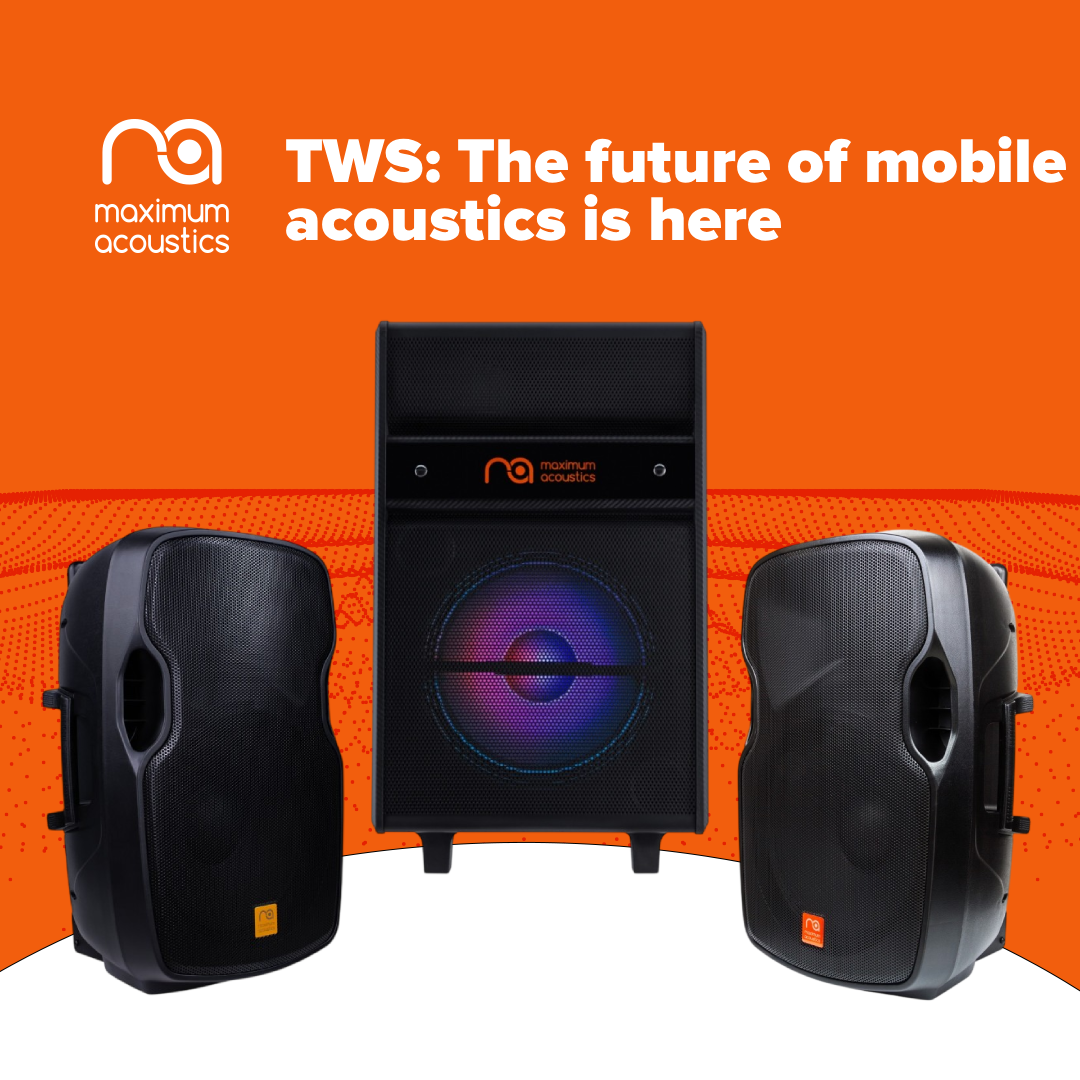
Just a few years ago, mobile sound systems were mostly associated with compromise: fewer cables, but also less control over sound, limited power, and not always stable connectivity. For a long time, the professional segment remained the domain of cables, mixers, stands, and carefully planned signal routing. However, the development of Bluetooth, battery-powered systems, and digital control modules has gradually changed the rules of the game.
Today, portable acoustics are no longer just a speaker for outdoor leisure. They are a working tool for a host, DJ, street musician, café owner, or presentation organizer. And TWS technology plays a key role in this transformation, allowing two active speaker systems to be combined into a full stereo pair without a signal cable between them.
In simple terms, a wireless stereo pair is a mode in which two speakers synchronize with each other via Bluetooth and distribute the left and right channels. For the listener, this means a wider soundstage, better spatial perception, and the feeling of a more “mature” sound. For a specialist, it means less setup time and more freedom in choosing where to place the speakers.
Why TWS has become relevant right now
For a long time, wireless audio transmission was not taken seriously by professionals. The main reasons were signal latency, the risk of dropouts, instability in spaces with many devices, and a general distrust of Bluetooth as a tool for work scenarios. But with the emergence of modern Bluetooth 5.0+ standards, the situation has changed significantly. The signal has become more stable, latency less noticeable, and the connection itself suitable not only for home listening, but also for mobile events, presentations, fitness studio classes, chamber performances, and work at small venues.
That is why professional sound is gradually moving beyond classic wired setups. Of course, TWS does not replace traditional signal routing where large stages, line arrays, and complex signal paths are required. But for the mobile segment, it is no longer just a “convenient option” — it is a real way to quickly build a high-quality sound system without unnecessary technical complexity.
The main advantage of TWS is speed. Where previously it was necessary to run cables between speakers, monitor the safety of walkways, and find the optimal route for signal routing, now it is enough to turn on two systems, activate Bluetooth mode, and synchronize them with each other.
For weddings, corporate events, and business gatherings, this is especially important. Fewer cables mean fewer risks, a cleaner-looking venue, and faster teardown after the event. For cafés, terraces, and small halls, it is an opportunity to position speakers in a way that is convenient for guests, not merely in a way dictated by cable length. For a fitness studio, it allows the space configuration to be quickly changed for a workout, workshop, or presentation.
One speaker can work as a background system for a small room, while two can serve as a stereo set for a dance floor, live performance, or open terrace. This flexibility is exactly what makes mobile sound relevant not only for entertainment, but also for commercial use.
TWS as part of modern mobile acoustics
We are actively developing the category of portable systems in which mobility is combined with functionality sufficient for professional use. In these product lines, TWS no longer looks like an experiment — it is a practical feature that helps quickly create a stereo system without additional cabling.
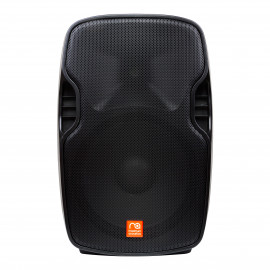
Maximum Acoustics Mobi.150A 2023, priced at UAH 9,999, is a portable two-way active speaker system with a battery. It features an updated rear panel, an additional terminal for charging from an external power source, and expanded connection options.
The system is equipped with a Class D amplifier with a rated power of 150 W, a 15-inch low-frequency speaker with a dual 1.5-inch voice coil, a 1-inch titanium compression driver, a built-in MP3 player, Bluetooth, and support for SD cards and USB drives. The design includes wireless microphones, an XLR/TRS 6.3 mm microphone input, an XLR/RCA line input, an AUX stereo input, a two-band equalizer, separate volume control for signal sources, an Echo effect, and the Mic Priority function, which allows the voice to take priority over music.
For mobile work, it is important that the Mobi.150A 2023 has an ABS plastic housing, a retractable handle, wheels, and a lithium battery that provides up to 4.5 hours of autonomous operation. This makes the model convenient for hosts, promotional events, street performances, and small events where sound needs to be deployed quickly without complex infrastructure.
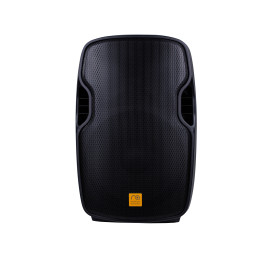
Maximum Acoustics Mobi.150MHA, priced at UAH 10,499, is built on the same concept but differs in its package: instead of two handheld wireless microphones, the user receives one handheld and one headset wireless microphone. This format is especially interesting for trainers, instructors, presentation speakers, and artists who need to keep their hands free while working.
The system also offers 150 W of rated power, a 15-inch woofer, a titanium compression driver, Bluetooth, USB, SD, an MP3 player, a mixer section with Echo, an input for a wired microphone, line inputs, and a battery with up to 4.5 hours of operating time. Its housing with wheels and a retractable handle simplifies transportation, while the 36-month warranty emphasizes the brand’s focus on long-term use.
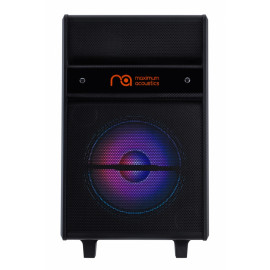
Another illustrative example is the Maximum Acoustics MusicBAND.100, priced at UAH 6,999. This is a compact 5-channel speaker system with 50 W RMS power, multimedia functionality, an FM receiver, Bluetooth, support for USB and memory cards, LED lighting, a microphone set, and a remote control.
Its housing is made of MDF with a carbon coating, which contributes to structural rigidity and better resonance control, while the retractable handle, wheels, and battery make the model convenient for mobile use. The MusicBAND.100 supports TWS mode, so two such systems can be synchronized for wider stereo sound at a party, presentation, or small performance.
Where TWS performs best
During an office presentation, two speakers can be placed in different corners of the room so that the speaker’s voice and musical accompaniment sound more even. For a café owner, this is a way to quickly adapt the sound for a summer terrace or an intimate evening without laying cables between zones. For a street musician, TWS opens up the possibility of achieving a stereo effect even where there is no access to power outlets, provided that battery-powered systems are used.
DJs and event hosts get another important benefit: connecting Bluetooth speakers reduces preparation time for an event and makes it possible to work at venues where there is no time or opportunity to build a classic cable-based setup. For small corporate parties, children’s events, fitness activities, workshops, and promotional campaigns, this is often the optimal solution.
In this context, TWS systems can be viewed as practical event equipment where not only power and frequency range matter, but also setup speed, venue neatness, autonomy, and ease of control.
Are there any limitations?
Despite its obvious advantages, TWS should not be seen as a universal replacement for all professional systems. The quality of operation depends on the distance between speakers, venue conditions, and the amount of radio interference. In crowded halls where many smartphones, routers, wireless microphones, and other wireless devices are operating simultaneously, it is worth checking connection stability in advance.
It is also important to remember that TWS is best suited for mobile and medium-scale tasks. For large concert venues, complex stage configurations, and main line array systems, classic professional signal routing remains relevant. But where speed, compactness, and placement freedom matter, TWS has very strong positions.
TWS in professional acoustics is not a fashionable trifle or a feature added “just for show.” It is a logical stage in the development of mobile sound systems that need to be powerful, autonomous, easy to transport, and quick to operate. For DJs, hosts, owners of small venues, trainers, musicians, and event organizers, this technology provides a tangible advantage: fewer cables, faster deployment, more flexible scaling, and a cleaner-looking venue.
The Maximum Acoustics product lines demonstrate that modern autonomous acoustics are already capable of handling not only everyday, but also semi-professional tasks. The Mobi.150A 2023, Mobi.150MHA, and MusicBAND.100 show how wireless technologies, battery power, built-in mixers, microphones, and TWS mode are gradually shaping a new standard of mobile sound.
For those who work with events, presentations, or live communication with an audience, this is no longer the future — it is a tool that can be used today.
Leave your comment